

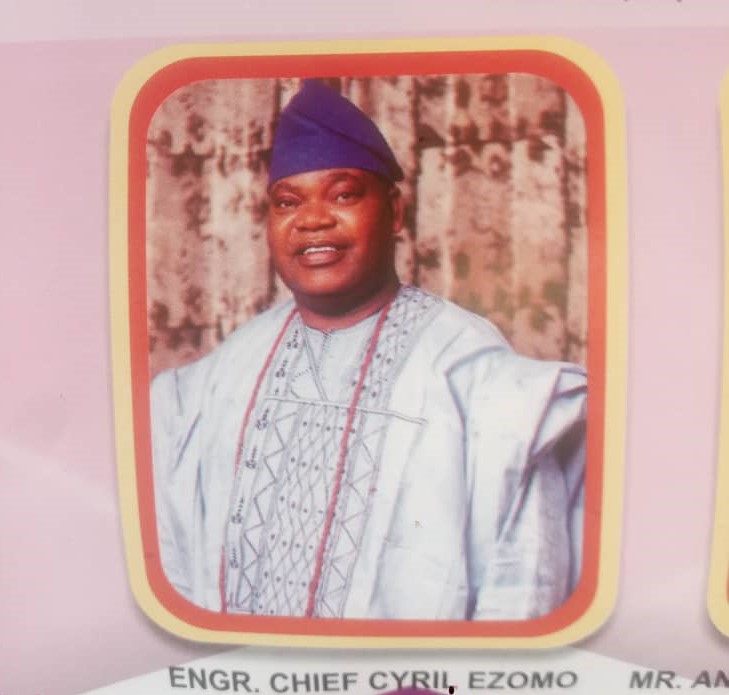
By Ejiro Nesisa
A Warri-based business tycoon and public affairs analyst,Chief Cyril Ejakpovi Ezomo , has said that the persistent insecurity in Nigeria, which has resulted in the loss of lives and property, can be reduced to the barest minimum if the country adopts a state policing system.
Ezomo made the assertion during an interview with selected journalists in Warri, Delta State. He dismissed concerns in some quarters that state governors would hijack state police for political purposes, insisting that such fears are unfounded, as state policing is successfully practised in many countries around the world. According to him, what is most important is to establish a clear legal and operational framework that will guide the activities of state police and ensure strict compliance with those guidelines.
“I am in support of the creation of State Police and, if possible, even Local Government Police, as is obtainable in other parts of the world,” he said. Ezomo further noted that, in addition to the various states, the Federal Capital Territory (FCT), Abuja, could also have its own police service, similar to what operates in the United States. He added that many universities abroad maintain their own police formations, funded and empowered by their respective institutions.
He argued that state police would function more effectively if Nigeria adopted a zero-party system of government, thereby guaranteeing the operational independence of state police departments through separate funding and administrative autonomy. “In the United States, there are city police departments, and even universities have their own police. They derive their authority and funding from the institutions they serve,” he stated.
The public affairs analyst also proposed that the office of the State Police Commissioner should be elective, with a renewable tenure of three years, to enhance accountability and public confidence. “If the State Police Commissioner knows that at the end of three years he or she will face the electorate, such a person will be compelled to serve the people diligently. If he fail to perform, he will be voted out,” he said.
Ezomo maintained that if city police systems have proven effective in other countries, there is no reason state police cannot succeed in Nigeria, provided there are sound legal frameworks, effective oversight, and strict adherence to operational standards. He added that the combination of state police and a zero-party system would strengthen checks and balances in governance. According to him, despite being constitutionally recognized as the third tier of government, many local government councils remain heavily dependent on state governments for decision-making and administration.
Commenting on the Federal Government’s proposed increase in the West African Examinations Council (WAEC) examination fee to ₦50,000 per candidate—which has since been suspended—Ezomo appealed to the government to abandon the proposal entirely, warning that it would place an unbearable financial burden on parents and worsen the nation’s educational challenges.
According to him, many parents already struggle to pay the current examination fees and would find any further increase unaffordable. “The government should not concentrate on revenue generation alone. It should prioritize the welfare of the people. There are communities today where parents cannot even afford ₦10,000. Why add another layer of hardship because the economy is difficult? It is unnecessary. I am pleased that some states, particularly in the North, pay examination fees for students,” he said.
While urging governments at all levels to formulate people-oriented policies and programmes, Ezomo also called on Nigerians to embrace unity, peace, and national cohesion as essential ingredients for the country’s progress and development.